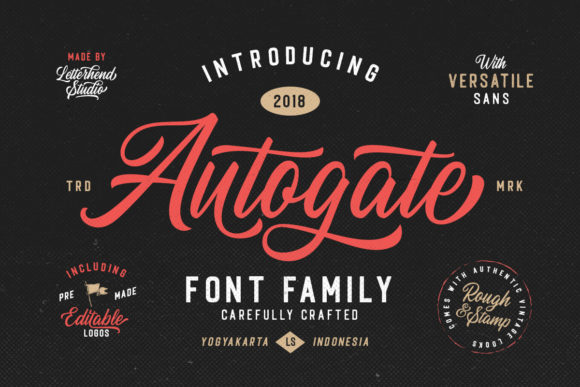
Autogate Family: A Font Duo That Actually Works Together
Finding a font that looks great on its own is one thing. Finding two fonts that genuinely complement each other without hours of trial and error? That's a different challenge entirely. The Autogate Family solves this problem by offering a script and sans serif duo designed from the ground up to work in harmony. If you've ever struggled to pair fonts for a logo, a social media post, or a product label, this typeface combination deserves a closer look.
Why Font Pairing Feels So Hard (And How Autogate Simplifies It)
Most designers have been there: you open your font library, scroll through hundreds of options, and try pairing script fonts with sans serifs only to end up with combinations that feel forced or awkward. The weights don't match. The x-heights clash. The overall mood shifts in conflicting directions. Autogate Family removes that friction because both styles share the same design DNA. The script carries a classic, slightly vintage warmth, while the sans serif counterpart provides clean, modern balance. Together, they create a visual conversation rather than a visual argument.
This matters for real projects. When you're building a brand identity, consistency across every touchpoint builds trust. A customer who sees your logo on Instagram should recognize the same personality on your website, your packaging, and your printed materials. Using a cohesive font duo like Autogate Family makes that consistency achievable without hiring a full-time typographer.
The Personality Behind the Typefaces
Autogate's script style has a hand-lettered quality that feels approachable and human. It's not overly ornate or difficult to read, which is a common pitfall with script fonts. Instead, it strikes a balance between elegance and legibility. The letterforms flow naturally, with enough character to feel distinctive but not so much flourish that they become decorative noise.
The sans serif companion grounds that energy. It's straightforward, versatile, and confident. Think of it as the reliable counterpart that keeps the script font from floating away into pure ornamentation. Together, they give you a complete typographic system with built-in contrast and cohesion.
This combination works particularly well for projects that need to feel both professional and personal. A coffee roaster's packaging. A boutique clothing brand's hang tags. A wedding invitation suite. A blogger's header graphics. The classic feel of Autogate Family adapts to contexts where warmth and credibility need to coexist.
Practical Applications Across Creative Projects
Let's talk about where this font duo actually shines in practice.
Logo design is perhaps the most obvious application. Using the script for a brand name and the sans serif for a tagline (or vice versa) creates an immediate visual hierarchy. The contrast draws the eye to the primary element while the supporting text stays readable and grounded. Small business owners launching a new brand often underestimate how much a well-paired logo typeface communicates about their values and personality before a customer reads a single word.
Packaging design benefits enormously from this kind of pairing. Product labels, box designs, and retail tags need to communicate quickly. The script element adds shelf appeal and emotional warmth, while the sans serif handles product details, ingredients, or instructions with clarity. Whether you're designing for a candle company, a skincare line, or a specialty food brand, Autogate gives you the tools to create packaging that looks polished without feeling corporate.
Social media graphics demand versatility. You might need a bold quote graphic for one post and a clean announcement for the next. Having both font styles from the same family means you can create a range of visual content that still feels unified. Instagram stories, Pinterest pins, Facebook headers, and LinkedIn banners all benefit from consistent typography that reinforces your visual identity at a glance.
Invitations and event materials are another natural fit. Save-the-dates, wedding programs, birthday party invitations, and gala event collateral all call for that blend of elegance and readability. The script handles names and headline details beautifully, while the sans serif manages the logistical information guests actually need, like dates, addresses, and RSVP details.
Merchandise and apparel design often relies on display fonts with personality. T-shirt graphics, tote bags, hats, and mugs benefit from typefaces that stand out without being illegible. Autogate's script style has enough character to serve as a standalone design element on merchandise, while the sans serif works well for supporting text or secondary product lines.
Website and blog design presents unique challenges because fonts need to perform across different screen sizes and devices. While the script style works beautifully for headers, hero sections, and accent text, the sans serif handles body copy, navigation, and longer-form content with the readability that digital platforms demand. Using both strategically across a website creates visual interest without sacrificing the user experience.
Print materials like business cards, brochures, flyers, and letterheads benefit from a cohesive type system. When you can pull from two complementary styles within the same family, layout decisions become faster and more intuitive. You spend less time experimenting and more time refining.
Matching Typography to Your Project Goals
Choosing the right font style starts with understanding what you want your project to communicate. Before selecting any typeface, ask yourself a few questions:
- What's the emotional tone? Autogate's script leans warm, classic, and slightly nostalgic. If your project calls for something edgy or ultra-modern, it might not be the right fit. But if you want approachable sophistication, it delivers.
- Who's your audience? A font that resonates with craft enthusiasts might not connect with tech startup investors. Think about who will encounter your design and what visual language they respond to.
- Where will the type appear? Screen-based projects have different requirements than print. Test how the fonts render at various sizes before committing to a final layout.
- How much text are you working with? Script fonts work beautifully for short bursts of text like headlines, logos, and pull quotes. For longer passages, the sans serif will serve you better.
One practical tip: print out samples or view them on the actual surface where they'll appear. A font that looks stunning on your laptop screen might lose its charm at three inches wide on a product label. Testing in context saves revisions later.
Building Visual Consistency Across Touchpoints
Brand recognition doesn't happen overnight, but consistent typography accelerates the process. When your audience sees the same typeface family across your website, your social posts, your email headers, and your product packaging, those visual cues accumulate into familiarity. Familiarity builds trust. Trust drives engagement and sales.
Autogate Family supports this because using both styles together creates a recognizable visual signature. You're not randomly selecting fonts from different sources for each project. You're working within a system designed for cohesion. That kind of intentionality shows up in the final product, even if your audience can't articulate why your designs feel more polished than competitors who mix and match fonts without a clear strategy.
For entrepreneurs and small business owners managing their own design work, this kind of built-in pairing reduces decision fatigue. You don't need to become a typography expert to make smart choices. You just need a well-designed font family and a clear understanding of how to deploy each style effectively.
Licensing and Commercial Use Considerations
Before using any premium font in commercial projects, always review the licensing terms carefully. Different font licenses cover different use cases. Some licenses allow unlimited personal use but require an upgrade for commercial applications like merchandise, client work, or products for sale. Others bundle everything together.
Take a moment to verify what the Autogate Family license covers for your specific needs. If you're a designer creating work for clients, confirm that the license permits that use. If you're selling physical products with the font incorporated into the design, make sure commercial use is included. This small step protects you legally and ensures you're respecting the work of the type designers who created the asset.
Final Thoughts on Choosing Creative Fonts
The best font choices feel inevitable in hindsight. They don't call attention to themselves with gimmicks or excessive ornamentation. They simply work, supporting the message and the brand without stealing focus. Autogate Family occupies that sweet spot with its paired script and sans serif offering. It brings enough personality to feel distinctive and enough restraint to stay versatile.
Whether you're refreshing a brand identity, launching a new product line, designing a wedding suite, or creating a social media content library, having a reliable font duo in your toolkit simplifies the creative process. It lets you focus on the message, the layout, and the strategy rather than getting stuck in an endless font pairing loop. And in a world where visual communication happens faster than ever, that kind of efficiency is worth its weight in design gold.