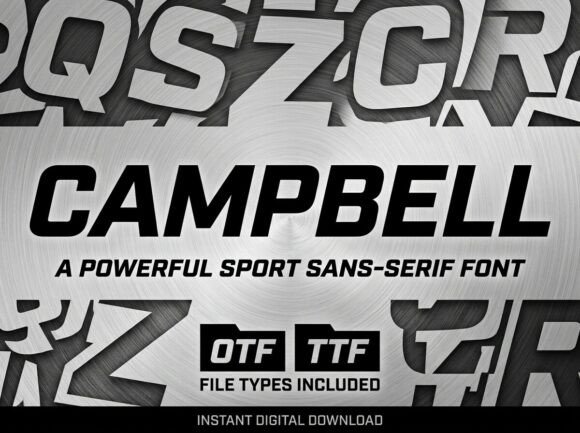
Campbell: The Bold Display Font for Unforgettable Branding
Ever scroll through a sea of logos, social media posts, or packaging that all feel... the same? The fonts are safe, predictable, and forgettable. In a world saturated with visual noise, how do you make a brand or project genuinely stand out? Sometimes, the answer isn't a complex design overhaul, but a single, powerful typographic choice. Enter Campbell, a decorative display font engineered to be the focal point of any composition.
A Typeface with Personality, Not Just Letters
Campbell isn't your everyday workhorse font. It’s a premium font designed with a singular, audacious purpose: to command attention. Think of it as the typographic equivalent of a statement piece of jewelry or a striking architectural feature. Its character set is a collection of artistic forms, each letter crafted with unique flourishes and a strong visual weight. This isn't about subtle communication; it's about making an immediate, unforgettable impression.
Because it's an ALL-CAPS display typeface, its role is specialized. You wouldn't use it for writing a paragraph in a novel or the body text of a website. Its power lies in the headline, the hero image, the logo mark, and the decorative initial. Every uppercase letter is designed to function as a mini work of art, making it ideal for projects where every visual element is scrutinized and appreciated.
Where a Font Like Campbell Truly Shines
Understanding a font's personality is one thing; knowing how to deploy it is where the real value lies. For designers, entrepreneurs, and creators, this is about matching the tool to the task. Campbell's bold, artistic nature makes it a versatile asset across numerous creative and commercial applications.
- Logo Design & Brand Identity: A logo needs to be distinctive and memorable. Campbell’s unique forms can become the cornerstone of a brand's visual identity, especially for businesses in creative industries, boutique retail, or luxury services. It helps in logo design that avoids generic templates.
- Packaging Design: On a crowded shelf, packaging has seconds to tell a story. Using this display font for product names or key descriptors can instantly communicate a brand's character—be it artisanal, bold, modern, or whimsical.
- Social Media Graphics & Digital Marketing: In the fast-scroll environment of Instagram or Pinterest, a bold headline in Campbell can stop thumbs. It’s perfect for quote graphics, promotional banners, and event announcements where social media graphics need to pop.
- Editorial & Print Layouts: Magazine covers, book chapter headings, and poster designs thrive on strong typographic hierarchy. Campbell can set the tone for an entire editorial design layout, drawing the reader in with its artistic flair.
- Merchandise & Invitations: From t-shirts and tote bags to wedding invitations and event posters, this font adds a layer of crafted, intentional design that elevates the perceived value of the item.
Making Strategic Typography Choices for Your Project
Choosing a font is a strategic decision, not just an aesthetic one. The right typeface supports your project's goals, whether that's conveying trustworthiness, creativity, elegance, or excitement. Here’s how to think about integrating a creative font like Campbell into your workflow.
First, consider font pairing. A highly decorative font like Campbell needs a complementary partner for body text. Pair it with a clean, highly readable sans serif font or a simple serif font. This contrast creates a visual rhythm that is both engaging and easy to follow. For example, a bold Campbell headline followed by a paragraph in a font like Open Sans or Lora creates a professional and balanced layout.
Second, always test for readability in its intended context. While Campbell is designed for impact at larger sizes, ensure your chosen color contrast and background don’t compromise its clarity. A stunning headline loses its power if it’s difficult to decipher.
Third, think about visual consistency. If you use Campbell for your brand's logo, consider using it sparingly in other key places—like website section headers or packaging headlines—to reinforce brand recognition without overwhelming the audience. Consistency builds familiarity, and familiarity builds trust.
Practical Considerations for a Commercial Font
When investing in a design asset like a font, understanding what you’re getting is crucial. The Campbell font package typically includes essential file formats for broad compatibility. The OTF (OpenType Font) file is the professional standard, offering advanced typographic features for design software like Adobe Illustrator or InDesign. The TTF (TrueType Font) file ensures universal compatibility, meaning your designs will render correctly across virtually all devices and operating systems.
Equally important is the licensing. For any commercial project—whether it’s a client's logo, merchandise for sale, or marketing materials—you must ensure you have the correct commercial font license. This legal step protects both you and the font creator, allowing you to use the asset confidently in your professional work. Always review the license terms provided with your purchase to understand the scope of permitted use.
Ultimately, a font like Campbell is more than just a set of letters. It’s a tool for storytelling, a catalyst for audience engagement, and a building block for a professional presentation. By choosing typography that aligns with your project's voice and pairing it thoughtfully, you move beyond ordinary design and create work that resonates, remembers, and stands out. For creators ready to break away from the ordinary, this might be the bold statement your next project needs.