Daily Notes: Your Go-To Friendly Sans-Serif Font
Imagine you've just launched a small-batch candle business. You've perfected your scents, sourced sustainable wax, and designed beautiful labels. But something feels off. Your packaging looks a bit sterile, your Instagram posts lack that cozy vibe you're going for. Often, the missing piece isn't a better photo or a new color palette—it's the right typography. Enter Daily Notes, a sans-serif font that bridges the gap between professional polish and approachable warmth, making it a secret weapon for creators who want their work to feel both trustworthy and inviting.
Where Clean Lines Meet a Friendly Vibe
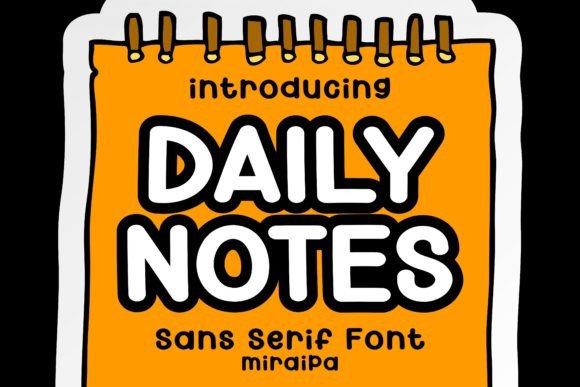
What makes a font feel "friendly"? It's not just about rounded edges, though Daily Notes has those in spades. It's the subtle balance between geometric precision and organic flow. The letterforms have a modern, clean structure that ensures clarity, but with gentle curves and slightly open apertures that give it a human, approachable character. Think of it as the typographic equivalent of a warm smile—it's professional, but it immediately puts people at ease. This makes it a standout choice in a sea of either overly rigid corporate sans-serifs or overly casual handwritten fonts.
This unique personality is what makes Daily Notes so versatile. It carries enough weight and presence for headlines and logos, yet remains remarkably readable in longer body text. This duality is rare. A premium font like this isn't just about looking good; it's about solving real communication problems. It helps a wellness brand feel calming, a children's product feel playful, or a local bakery feel genuinely welcoming—without ever sacrificing legibility.
Practical Applications: From Branding to Your Inbox
Let's get specific. Where does a font like Daily Notes actually shine? Its strength lies in its adaptability across different mediums and contexts, making it a valuable piece of your design assets toolkit.
- Brand Identity & Logo Design: For a logo design, Daily Notes can create a mark that's memorable and distinctive without being distracting. It works beautifully for boutique studios, consultants, cafes, and lifestyle brands. Pair it with a simple icon or use it in a clean wordmark. Its friendly nature helps build immediate rapport with your target audience, which is foundational for strong brand recognition.
- Packaging & Product Design: On a product label, website header, or packaging design, this creative font ensures your message is clear and your brand's personality is front and center. It's excellent for ingredient lists, care instructions, or taglines where readability is non-negotiable.
- Digital Presence: For web design and social media graphics, Daily Notes is a powerhouse. Its clean lines render crisply on any screen, from smartphones to large monitors. Use it for Instagram quotes, Facebook ads, blog post titles, or your entire website navigation. It ensures your digital content looks cohesive and professional, which boosts audience trust and engagement.
- Print & Physical Media: Don't overlook print. This sans serif font is perfect for editorial design in magazines or lookbooks, posters for local events, invitations, and even merchandise like tote bags or mugs. Its versatility means you can use one font family across your entire brand ecosystem for seamless visual consistency.
- Digital Products & Marketing: Creating an ebook, a course workbook, or a lead magnet PDF? Daily Notes provides a clean, easy-on-the-eyes reading experience. In marketing assets like email newsletters or sales pages, it helps maintain a professional yet approachable tone that can improve click-through rates.
Making It Work: Font Pairing and Practical Tips
Choosing a great font is step one. Using it effectively is where the magic happens. Here’s how to integrate a typeface like Daily Notes into your projects with confidence.
Know Your Goal First: Before you even open your design software, ask: What is the primary emotion or message I need to convey? If your goal is a warm, inviting, and trustworthy feel, Daily Notes is a perfect candidate. If you need something ultra-serious or edgy, you might look at a different modern typography option. Match the font's personality to your project's core objective.
Master the Art of Pairing: A single font family can often carry a design, but pairing it strategically adds depth. Daily Notes, being a friendly sans-serif font, pairs wonderfully with a simple, elegant serif font for body text in editorial layouts, creating a classic yet contemporary look. For a more dynamic feel, it can be contrasted with a subtle script font or handwritten font for accent text, like a quote or a call-to-action. The key is contrast in style, not in overall mood—keep both fonts feeling approachable.
Prioritize Readability Above All: The most beautiful font is useless if people can't read it. Test your chosen styles at the size they'll actually be used. Check the letter-spacing (tracking) and line spacing (leading). Ensure there's enough contrast between your text and background colors. Daily Notes is designed for clarity, but always do a final readability check, especially for mobile screens or small print.
Explore the Included Styles: A robust commercial font like Daily Notes often comes with multiple weights (Light, Regular, Medium, Bold) and sometimes even italic styles. Using these different weights within the same project is a simple way to create hierarchy and visual interest without introducing a new typeface. For example, use Bold for headlines, Regular for subheadings, and Light for body text.
Understand the License: If you're using this font for client work or commercial products, you must ensure you have the proper commercial licensing. Always review the license agreement that comes with the font. Reputable font designers and foundries are clear about what uses are permitted. This protects you legally and supports the creators who make these tools possible.
In the end, typography is about communication. A font like Daily Notes gives you a tool to communicate not just with words, but with feeling. It helps you build a visual language that is consistent, recognizable, and genuinely connects with the people you want to reach. It’s the quiet workhorse that makes everything else in your design look better, feel more cohesive, and ultimately, work harder for your brand or project. The right typeface doesn't just display your message; it helps shape how that message is received.