Give Your Brand a Handmade Edge with Hafine Brush
There’s a specific kind of energy that comes from a design that looks like it was actually made by human hands. In a digital landscape often dominated by rigid geometry and sterile sans-serifs, finding a typeface that breathes can feel like a breath of fresh air. That is exactly the space where Hafine Brush operates. It isn’t just a collection of letters; it is a typeface with personality. If you are tired of your designs looking like templates, or if your brand identity feels a bit too clinical, incorporating a handwritten font like this can bridge the gap between professional polish and authentic warmth.
But using a brush font effectively requires more than just typing out a headline. It requires an understanding of how fluid, expressive typography interacts with your audience. Whether you are a small business owner crafting a new identity, a content creator looking to spice up thumbnails, or a graphic designer working on packaging design, understanding the nuances of this specific creative font will help you maximize its impact.
The Anatomy of an Expressive Typeface
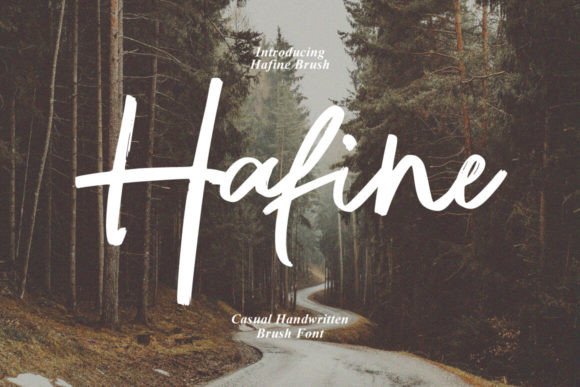
What separates a generic script from a premium display font? It usually comes down to the details. Hafine Brush is designed to mimic the natural flow of ink on paper, but without the imperfections that make handwriting hard to read at small sizes. It strikes a delicate balance. It has the texture and movement of a hand-drawn element, but the structure of a professional typeface. This makes it incredibly versatile. It doesn't scream "amateur"; it whispers "artisan."
One of the standout features of this font is the depth of its OpenType features. If you are using professional design software like Adobe Illustrator, Adobe Photoshop, or Adobe InDesign, you unlock a treasure trove of customization. The alternative characters are divided into several features, including Stylistic Alternates, Stylistic Sets, and Ligatures.
Why does this matter to you? Because repetition is the enemy of visual consistency. If you type the word "success" and the two s's look identical, it looks manufactured. Ligatures automatically connect specific letter pairs (like "th" or "st") in a way that mimics natural cursive writing, while Stylistic Sets allow you to swap out a standard "g" for a more decorative one. This level of control ensures that your logo design or poster looks custom-made, not pulled from a generic library.
Practical Applications: From Packaging to Social Media
The true test of a premium font is how well it adapts to different mediums. Hafine Brush excels in environments where you need to grab attention quickly or convey a sense of personality.
1. Branding and Logo Design
For brands that want to feel approachable—think boutique coffee shops, lifestyle blogs, handmade cosmetics, or creative agencies—a brush font is often the anchor of a great logo. It provides immediate character. However, because display fonts can be hard to read in long sentences, it is best used for the wordmark or logo itself, paired with a clean sans serif font or serif font for the tagline.
2. Packaging Design
If you sell physical products, your packaging is your silent salesperson. Using Hafine Brush on a label can suggest that the product inside is organic, handcrafted, or premium. It works beautifully for headers on coffee bags, artisanal jam jars, or clothing tags. The texture of the font implies a tactile quality before the customer even touches the product.
3. Social Media Graphics
On platforms like Instagram or Pinterest, visual noise is high. You have milliseconds to stop a user from scrolling. Bold, expressive typography is your best weapon here. Use this font for quotes, sale announcements, or story highlights. Because it is a display font, it commands attention in a way that standard Arial or Helvetica simply cannot.
4. Editorial and Web Design
While you wouldn't use a brush font for your main body copy (readability would suffer), it is a fantastic tool for web design headers. It breaks up the monotony of text-heavy pages. In editorial design, such as magazine layouts or digital products like eBooks, use it for pull quotes or chapter titles to add a human touch to the layout.
Strategic Typography: Matching Font to Goal
As a designer or business owner, your choice of typography is a strategic decision, not just an aesthetic one. The font you choose signals your values. A geometric sans-serif signals efficiency and modernity. A handwritten font like Hafine Brush signals creativity, warmth, and individuality.
When integrating this font into your brand identity, consider the following practical advice:
- Font Pairing is Essential: A font with this much personality needs a grounding partner. Avoid pairing it with other decorative fonts. Instead, look for a sturdy, neutral sans serif or a classic serif. For example, pairing Hafine Brush with a font like Montserrat or Open Sans creates a beautiful hierarchy where the brush font does the "shouting" and the sans-serif does the "talking."
- Readability Considerations: Always squint test your design. If the headline becomes a blur of ink, the tracking (space between letters) might be too tight. Brush fonts often need a little breathing room. Ensure that your background doesn't compete with the texture of the letters. High contrast is key.
- Reviewing Included Styles: Don't just install the standard file and call it a day. Dig into the folder. There may be specific styles—perhaps a bold version or a light version—that suit different contexts better. A lighter weight might work for invitations, while a heavier weight is better for merchandise like t-shirts or tote bags.
The Technical Edge: Why OpenType Matters
If you are new to professional design, the mention of OpenType features might sound intimidating, but it is actually your shortcut to high-end results. Many people download a creative font, type out their text, and wonder why it doesn't look like the preview image. The secret is usually in these features.
When you use software like Adobe Illustrator, you aren't just typing; you are orchestrating glyphs. By accessing the Stylistic Alternates, you can change the entry and exit strokes of letters. This is particularly useful if you have two letters next to each other that look awkward together. You can swap one for an alternate version to create a seamless flow.
This is vital for logo design and marketing assets where the text needs to look perfect. It removes the "digital" feeling and enhances the "handmade" illusion. It is the difference between a font that looks like it was stamped and one that looks like it was written specifically for your project.
Commercial Use and Licensing
Before you deploy Hafine Brush across your entire marketing ecosystem, one practical step remains: licensing. If you are using this for a personal hobby, a standard license is usually fine. However, if you are a business owner, agency, or freelancer using the font in a commercial font capacity—for a client's logo, a product for sale, or monetized content—you must ensure you have the correct commercial license.
Respecting font licensing protects you legally and supports the type designers who pour hours into creating these intricate design assets. Always read the ReadMe file included with your download to understand where and how you can use the font.
Ultimately, Hafine Brush offers a solution to a common design problem: how to be professional without being boring. It brings a tactile, human quality to the digital screen, helping your brand resonate with an audience that craves authenticity. Whether it is a poster for a local event or the packaging for a global product line, this typeface proves that typography is not just about reading words—it is about feeling them.